
Leg Length Discrepancy
What is Leg Length Discrepancy?
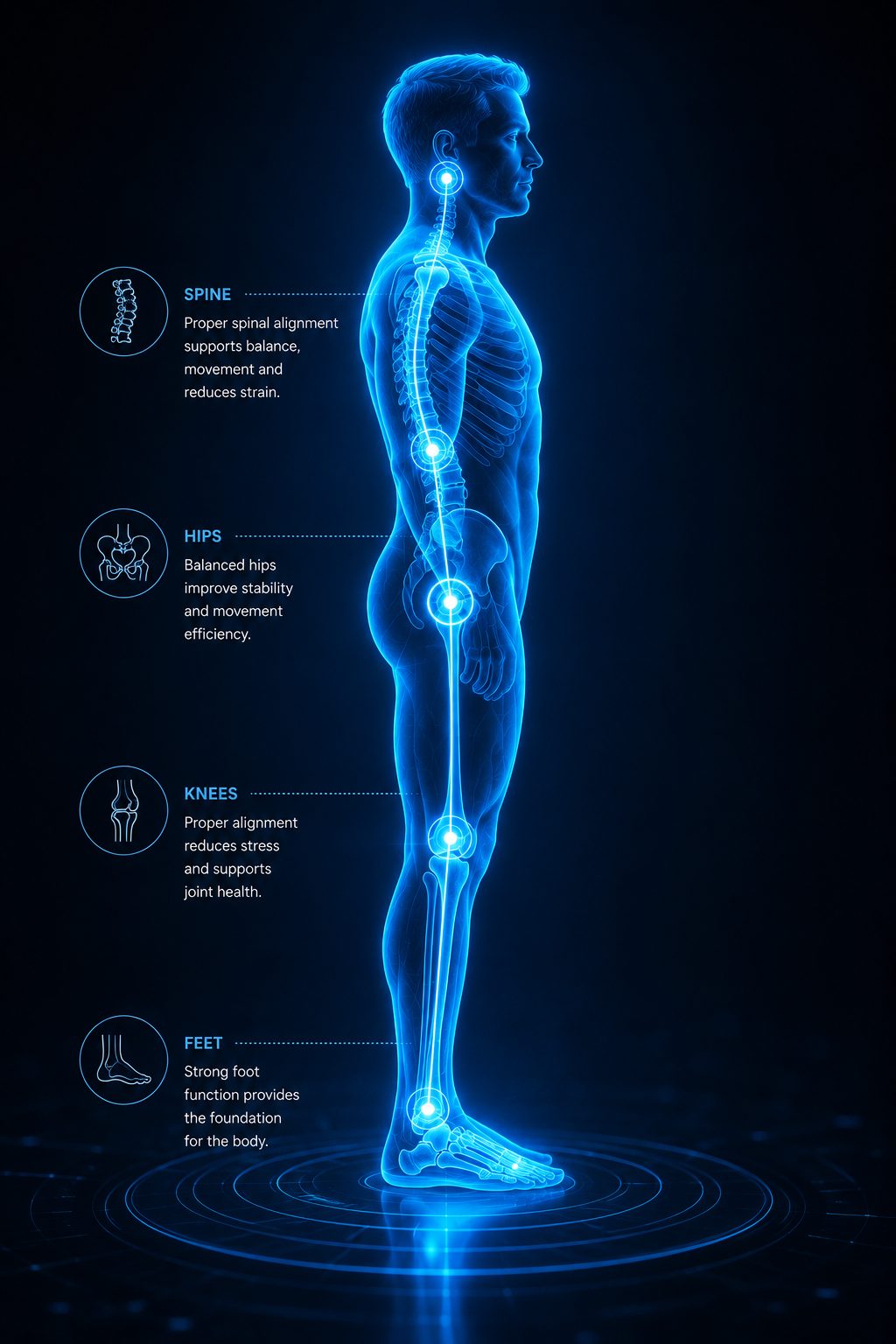
Leg length discrepancy (LLD) occurs when one leg is shorter than the other. This difference can be structural (true bone length difference) or functional (caused by pelvic alignment, joint restriction, or muscular imbalance). Even small discrepancies can influence posture, walking patterns, and load distribution through the lower limbs over time.
Leg length discrepancy may develop due to congenital factors, growth variations, previous fractures, joint conditions, or can be secondary to biomechanical issues affecting the pelvis, hips, knees, or feet.
Common Causes
Common causes of leg length discrepancy include:
- Congenital differences in bone growth
- Previous fractures or trauma affecting bone development
- Hip, knee or ankle joint conditions
- Scoliosis or pelvic tilt
- Muscle tightness or imbalance
- Foot and ankle biomechanics (including overpronation or supination)
- Post-surgical changes or joint replacements
- Functional adaptation due to pain or injury
Symptoms
Symptoms may include:
- Uneven posture or visible asymmetry when standing
- One hip appearing higher than the other
- Limping or altered walking pattern
- Lower back, hip, knee or foot pain
- Fatigue or discomfort during walking or running
- Increased wear on one side of footwear
- Recurrent soft tissue injuries on one side of the body
- Feeling “off balance” or uneven during movement
Treatment Options
Assessment and management may include:
- Comprehensive biomechanical and gait assessment
- Evaluation of pelvic alignment and lower limb function
- VALD assessment technology for objective strength and movement analysis
- Foot posture and pressure assessment
- K-Laser therapy to assist pain and tissue recovery where required
- Shockwave therapy for associated tendon or soft tissue conditions
- Clinical myotherapy techniques and soft tissue treatment
- Joint mobilisation and manipulation (FMT) where indicated
- Dry needling therapy
- Custom orthotics or heel lifts to address limb length differences when appropriate
- Footwear assessment and modifications to improve symmetry and load distribution
- Exercise rehabilitation to improve strength, stability and movement control
- Taping and support strategies ✓ Referral for imaging or specialist review when required
At Podiatry Medics, Dr Larry combines expertise in Podiatry, Clinical Myotherapy and Exercise & Sports Science to assess not only the leg length difference itself, but also how the feet, ankles, knees, hips and pelvis may be contributing to the imbalance.
Early assessment and management can help improve symmetry, reduce pain, and restore more efficient and comfortable movement in daily life and sport.
Why Choose Podiatry Medics?
At Podiatry Medics, we focus on identifying the cause of pain and creating practical treatment plans to support movement and long-term results.
No referral required.