
Pronation Podiatry
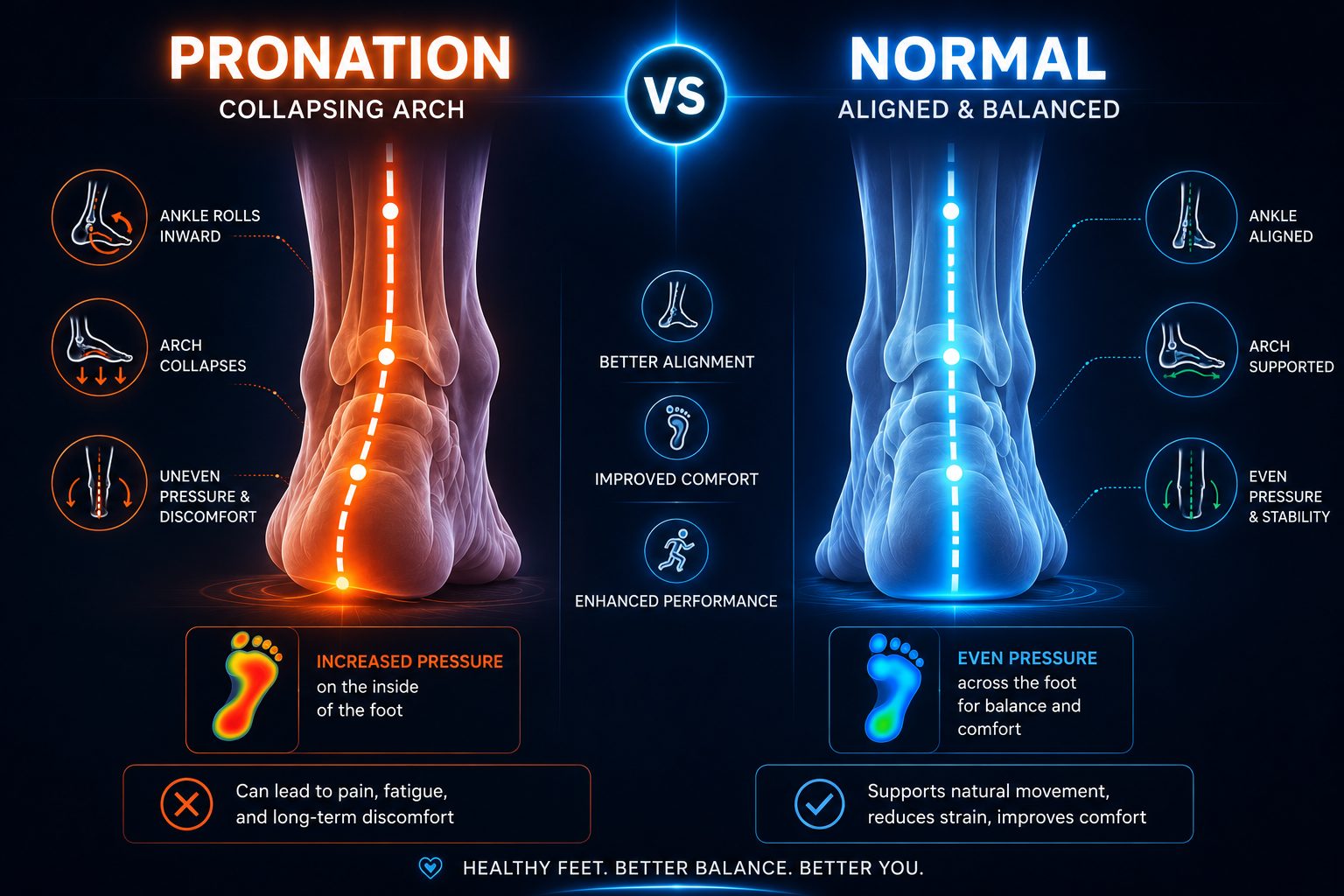
What is Pronation?
Pronation is a normal movement of the foot that occurs during standing, walking and running.
As your foot contacts the ground, the joints through the middle and back of the foot naturally roll inward slightly. This movement helps the body absorb impact and distribute pressure more efficiently — similar to how suspension works in a car.
Pronation is an important part of normal foot function and, in most cases, is completely healthy.
Is Pronation Bad?
Not necessarily.
Everyone’s feet move differently and the amount of pronation varies from person to person.
A mild to moderate amount of pronation is normal and helps with shock absorption. However, when the foot rolls inward excessively, this is known as overpronation (hyper-pronation).
Overpronation may be influenced by factors such as:
- Natural flexibility
- Foot structure
- Muscle weakness
- Footwear choices
- Increased body weight
- Previous injury
Because the feet form the foundation of the body, changes in foot position can influence the alignment of the ankles, knees, hips and lower limbs.
Over time, excessive pronation may increase pressure through muscles, joints and soft tissues which can contribute to discomfort or injury in some individuals.
Signs You May Have Excessive Pronation
Some people with overpronation may experience:
- Foot fatigue
- Heel pain
- Arch pain
- Reduced balance or stability
- Lower leg discomfort
- Recurrent foot or ankle injuries
- Difficulty with prolonged standing or walking
Not everyone with pronated feet will experience symptoms, which is why assessment is important.
Is Having Flat Feet a Problem?
Not always.
Flat feet do not automatically require treatment and many people function comfortably with flatter foot posture.
For example, younger children commonly have flatter appearing feet as part of normal development. In adults, flat feet may sometimes develop gradually over time and can occasionally be associated with increased strain on joints, muscles or tendons.
The key question is not whether your foot looks flat — but whether it is functioning well and remaining comfortable.
If your feet are strong, stable and pain free, treatment may not be necessary.
How Podiatry Medics Can Help
At Podiatry Medics, we assess both foot posture and function to understand how your feet are working as part of the whole body.
Depending on your needs, treatment may include:
- Footwear advice
- Strengthening and mobility programs
- Custom orthotics or supportive insoles
- Gait assessment
- Load management strategies
Our goal is not to change every flat foot — it is to improve comfort, function and long-term foot health. No referral required.